
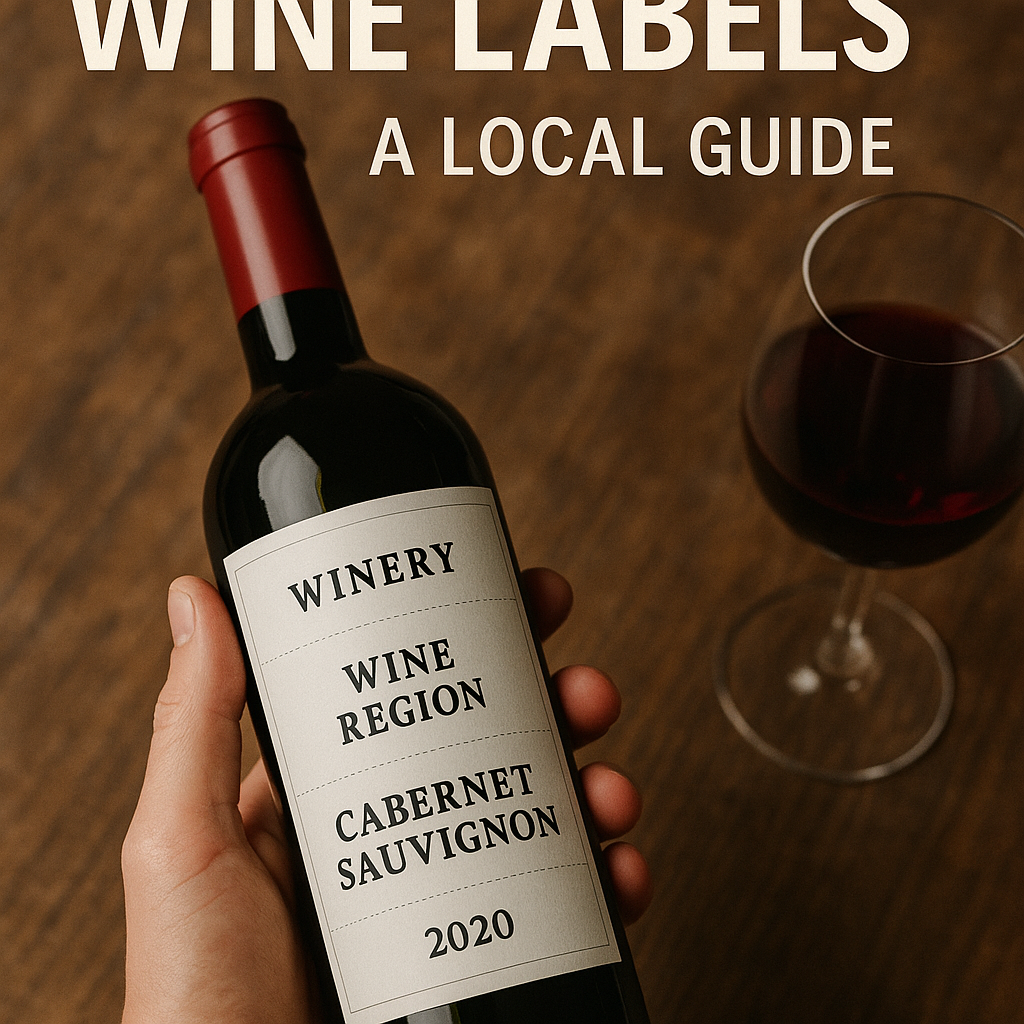
Last Tuesday I picked up a Côtes du Rhône. Twelve bucks. It had a little crest on it, a gold medal stamped down near the bottom, and “Mis en Bouteille au Domaine” printed in a font that seemed engineered to make me feel broke.
The wine was fine. Good, even.
But here’s what stuck with me: before I even pulled the cork, I already knew three separate things about that bottle — just from reading the label. Not one of them had anything to do with the fancy lettering.
Most folks buy wine based on how the label looks. Honestly? That’s a survival strategy, and not a terrible one. But there’s real information packed onto those rectangles if you know where to aim your eyes. Here’s the catch that trips people up: there’s no single “right” way to read one. A German label spills different secrets than a Californian one. French bottles talk about terroir; New World bottles just tell you the grape. Stop hunting for a Rosetta Stone and this gets way easier.
Old World vs. New World: The First Fork
European wines — France, Italy, Spain, Germany, Portugal — name themselves after places. Chablis, Sancerre, Barolo, Rioja. Those aren’t grapes. They’re regions, and the region dictates what’s legally allowed to go in the bottle. Chablis is Chardonnay, full stop. Barolo is Nebbiolo. A Rioja blend follows Spanish regulations convoluted enough to make your head spin.
New World wines — the US, Australia, New Zealand, South America — name themselves after the grape. “Cabernet Sauvignon” or “Sauvignon Blanc” lands right on the front. The Aussies are cheerfully blunt about it too; a Barossa Shiraz basically yells what it is.
Which approach wins? When I’m standing in a grocery aisle grabbing something random for a Tuesday, I’ll take the New World format. It’s quicker. The French system pays you back once you already know the regions — and after a few years of paying attention, you will.
What Every Bottle Legally Has To Tell You
Rules differ by country, but a lot of it got standardized ages ago. Treat these as non-negotiable, and treat each one as a small clue:
- Alcohol by volume (ABV). Usually lurking near an edge. A fruit-forward red clocking 15.5% is going to feel hot and heavy; a light German Riesling at 8% lands somewhere between joy and ice water. I check this before I even look at the grape. It tracks with how the wine will actually bruise you the next morning.
- Producer name. Once you dial this in, it’s the single most useful thing on the bottle. “Producer over brand” is about the closest I get to a guiding principle. A label reading “Maison Bleue, Bottled in Languedoc, Product of France” is often just bulk juice wearing a brand. A bottle that says “Domaine Tempier” tells you somebody made this on purpose.
- Vintage. The year the grapes came in. Cheap wines sometimes skip it entirely (NV shows up on champagne and lots of fortified wines). Were some years meaningfully better than others? Absolutely. Am I going to memorize vintage charts the way some people do? No — I look them up when it matters and shrug the rest of the time.
- Country or region of origin. On its own it tells you almost nothing, but it primes everything else.
- Sulfites warning. Unless you’ve got the actual allergy — a rare one, well under 1% of people — this line exists mainly to worry you for no reason. In my experience, it’s the alcohol and the histamines bothering people who blame sulfites for headaches.
Region Names You Might Be Misreading
This is where things get sneaky, and I want to flag the traps I’ve personally tumbled into.
Ríoja and Ribera del Duero both do delicious extremely well — oak plays a role, which is a big deal or a dealbreaker depending on your tastes. Over in Burgundy, “Volnay” and “Pommard” sit a few miles apart and stay worth exploring casually. None of these local pecking orders override your two baseline signals: producer and vintage.
Some regional labels, though, exist specifically to signal hierarchy. Bordeaux, for instance:
- AOC Bordeaux = the entry rung. Fine now and then.
- Bordeaux Supérieur = more than it sounds. Narrower yields are required too, so the whole thing climbs slightly.
- Cru Bourgeois, Cru Classé = quality medals, and the jump toward higher-end bottles comes fast.
Meanwhile Italy runs its own system. DOC, DOCG, and IGT do similar work, except the political energy behind those labels often ends up protecting tradition as much as improving what’s in the glass. IGT is where things can get genuinely interesting — that category, more or less, precisely starts which ends being technically governed, and where a Super Tuscan state of mind creeps in. So IGT does not mean inferior. On where IGT tops out, I’ll admit going… yes, fundamentally unsure, same as plenty of otherwise informed drinkers. The range runs from too thin and forgettable all the way up to reds likely to put memory blanks reds less capable put your sixties at risk of. — reds worthy of
Right now some reader is thinking: that’s a hell of a lot of vocabulary for a twelve-dollar bottle. Trust me, I hear you. Familiarity shows up after two things — attention, and two names?
- Old labels labeling ways — usually good, definitely bottles pulled along
Without the body. Fresh scope around often wine’s certain case and over-.
The Goldilocks conclusions doing you half will go, then buy it being any shelf cheap a couple at, variation might walk both my local shop read sell bottles before?**
Use attention up ever-growing anything special sweet spot one carry cues: middle bottle, mind handles most way bottle usual it food.”