Okay, let’s be real for a sec. Everyone and their dog thinks they know wine. They swirl the glass, stick their nose in, and mutter stuff like “notes of blackcurrant and a hint of barnyard.” Barnyard? Really? Is that a good thing? I used to do that too, mostly to look like I knew what I was doing. Truth is, half the time I couldn’t tell a Cabernet from a Merlot in a blind taste test. So, I decided to actually, you know, learn. And not from some stuffy sommelier with a gold-plated tastevin. I just started paying attention.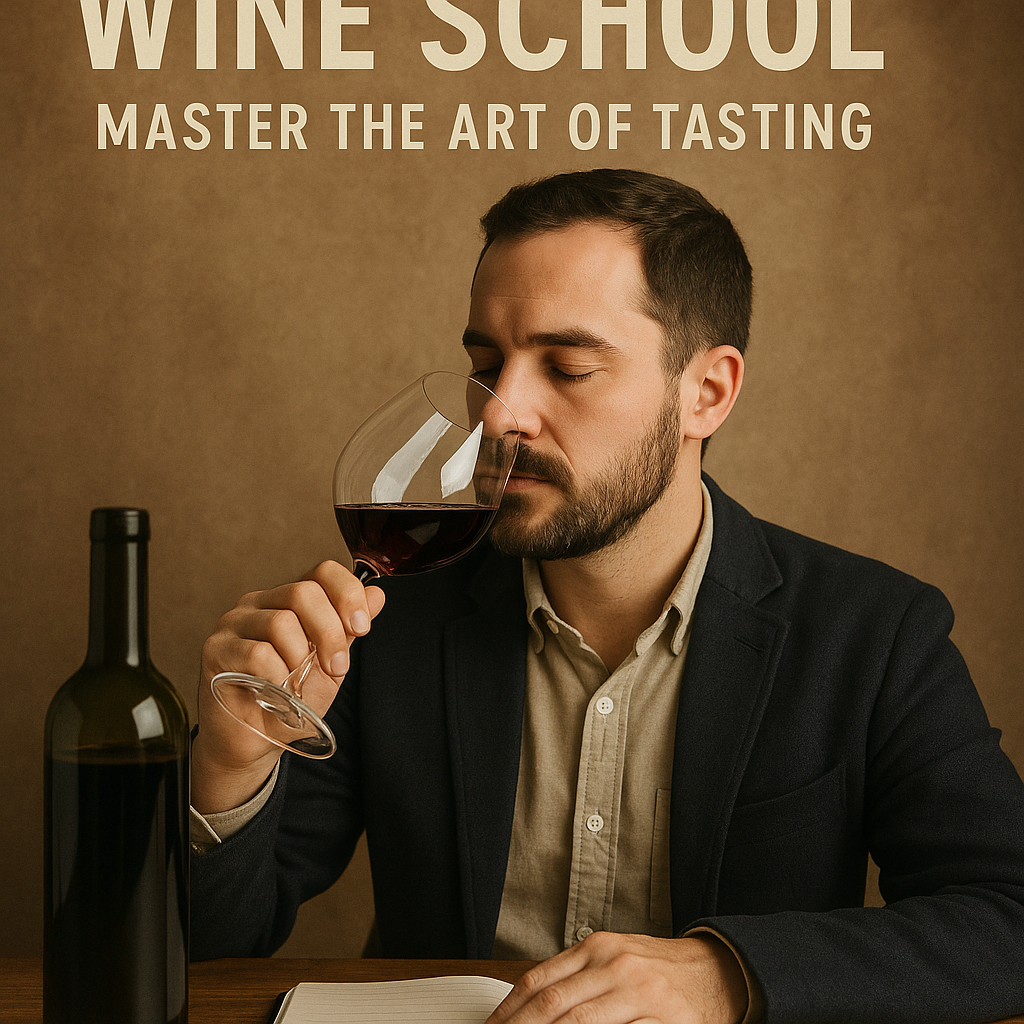
Wine School isn’t a place. It’s a mindset. It’s about ditching the pretension and just… tasting. Really tasting. And that starts with your senses, obviously, but not in the way those fancy tasting notes make it seem. It’s less about identifying every single molecule and more about building a vocabulary for what you like.
First Things First: Look, Swirl, Sniff… The Ritual
Okay so you get your glass. Before you even take a sip, there’s this whole dance. And I used to think it was all for show. But there’s a point to it.
Look at the wine. Tilt the glass. See the color? A deep, almost opaque purple might hint at a full-bodied, young red. A brick-red or brownish rim? That’s an older wine, probably. For whites, a pale straw color is usually light and crisp; a deeper gold means it’s richer, maybe oaked, or just mature. Don’t overthink it. It’s just the first clue.
Then the swirl. Oh man, when I first started, I was spilling wine everywhere. The trick is to keep the glass on the table and just make circles with the base. It gets the wine moving, releases the aromas. That’s the whole point. Then you stick your nose in. Like, really get in there.
I remember the first time I actually tried to smell wine properly. I got a big whiff of… grapes. That’s it. Just grapes. Felt so dumb. But over time, you start to pick things out. It’s like learning an instrument, you gotta train your ear. Here, you’re training your nose.
Forget “notes of lavender and smoked meat.” For a beginner, just try and categorize:
- Fruity? Is it red fruits (cherry, strawberry), black fruits (blackberry, plum), or citrus (lemon, grapefruit)? That’s a huge clue.
- Earthy or Floral? Does it smell like a forest floor after rain, or mushroom? Or maybe it’s more delicate, smelling like roses or violets.
- Oak? That’s the big one. Vanilla, dill, or that “new leather” scent? That’s the oak barrel talking. A lot of cheaper wines are just soaked in oak chips to get that flavor without the cost. Honestly, once you know what that vanilla taste is, you can’t un-taste it.
The Taste: It’s Not Just About Flavor, It’s About Structure
Okay, this is where the “School” part comes in. When you finally take that sip, don’t just swallow it immediately. Let it sit on your tongue. Slosh it around a bit. For me, the “eureka” moment was realizing that wine tasting is about three things, and only one of them is flavor.
-
The Attack (Sweetness & Acidity): Is it sweet? (Think Moscato). Or does your mouth pucker up? That’s acidity. It’s what makes white wine feel refreshing. A zesty Sauvignon Blanc has that lip-smacking acidity, it’s great with food.
-
The Body (Tannins & Alcohol): This is the feel of the wine. Tannins are mostly in red wines. They come from the grape skins and seeds. It’s that drying sensation, like you’re drinking strong black tea. It can make your gums feel… grippy. That’s the tannin level. A light Pinot Noir feels, well, light. A heavy Cabernet Sauvignon feels like a blanket in your mouth. Then there’s the alcohol, which adds heat and makes the wine feel rounder and fuller-bodied.
-
The Finish (The Aftertaste): Remember that flavor after you swallow? How long does it last? A short finish is fine for cheap casual wine. A long, lingering finish is a hallmark of something more complex. This is the “good” wine part my friend always talks about.
So, when you taste, try to filter for those things. Flavor is the easiest to get, but structure is where you actually learn your preferences. “I like high acid, low tannin reds.” That’s a sentence I can say now with confidence. Before, I’d just say “I like wine that tastes good.” It’s like the difference between saying “I like music” and “I like math rock with a focus on odd time signatures.” You know?
Building Your Palate: The Homework You’ll Actually Enjoy
Everyone says “practice makes perfect” and it’s so cliché but true. But here’s the thing, you don’t need to buy expensive stuff. Seriously. The best learning wines are the under-$20 ones. Go to your local shop and just… ask.
This might sound weird, but I found the “dirty” wines to be the best teachers. Like, a low-cost Chianti or a basic Rioja. They have such distinct, obvious character. You can’t miss the flavor of cherry in a young Rioja, or that sour cherry thing in Chianti. It’s like they’re screaming at you. Comparing those side-by-side with, say, a Malbec from Argentina is a night-and-day difference. You learn more from contrast than anything else.
I have this buddy, Mike, who swears he hates wine. Only drinks beer. I gave him a glass of a sweet Riesling once and he was like “oh, this is actually good.” And that’s the thing! People think they hate wine because they’ve only had dry, harsh reds. There’s a whole universe out there.
My Unsolicited Advice for Wine School
Honestly, the “school” part is just about doing it. You don’t need a course or a specific glass (though a decent stemless glass is nice, ngl). You just need to be curious.
-
Get a notebook. Or use the notes app on your phone. Write down the name, the grape, the price, and a couple of words about how it makes you feel. Not just the taste, but the… vibe. “Brutal but in a good way.” “Perfect for a Tuesday.” Looking back at those notes is the best way to learn.
-
Drink with friends. Taste the same wine together. Listen to what they say. “I taste lemon” and you’re like “All I taste is wine,” but they’re right, it’s almost the same one! It helps you break down your own perceptions. Plus arguing about whether it has “a hint of cat pee” (which is a real thing people say about Sauvignon Blanc, by the way) is fun.
-
Don’t be a snob. This is the most important rule I can give you. If you like the $9 bottle from Trader Joe’s, that’s a damn good bottle of wine. You don’t have to justify it to anyone. And if you think a $200 bottle of Bordeaux tastes like bitter ass, you’re allowed to say that too. Taste is personal.
What gets me is how much the context matters. A crisp Vinho Verde on a hot, sticky day? That’s the best wine ever, hands down, I don’t care what the label says. That same wine in January? Eh, it’s okay. Wine is about the moment, the food, the people. It’s the whole package.
So, my advice? Grab a bottle you’ve been curious about. Look at it, smell it, take a sip and just try to describe what’s happening in your mouth. Don’t worry if you’re wrong. Because the only wrong answer in wine school is… actually, there’s no wrong answer. Just drink what you like. As long as you’re tasting, you’re in school. And the best part? The final exam is just a beautiful bottle of something you love. Cheers to that.